Zoo Crew Back to School SVG: Strategic Design for Educators, Makers, and Small Business Owners
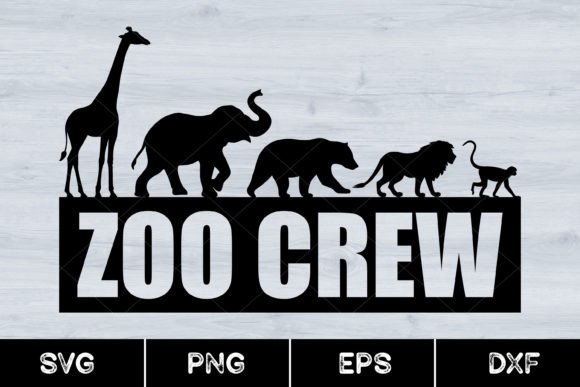
When planning back-to-school launches—whether for a classroom, a craft studio, or a boutique print-on-demand shop—the right visual asset can accelerate execution while reinforcing identity. The Zoo Crew Back to School SVG is more than decorative clipart: it’s a scalable, production-ready design system built for intentionality. Its layered vector structure (SVG, EPS10, DXF, transparent PNG) supports precise cutting, printing, and digital integration—provided your software and hardware are compatible. That compatibility isn’t optional; it’s foundational to avoiding wasted time, material, or customer expectations.
Why This Design Fits Real-World Workflows—Not Just Aesthetic Trends
The Zoo Crew Back to School SVG works because it aligns with how professionals actually operate—not how stock graphics platforms assume they do. Educators use it to create consistent, themed bulletin boards without rebuilding layouts each August. Small business owners embed it into Canva templates for social media announcements, then export the same vector cleanly to Cricut Design Space for vinyl decals on backpacks or lunchboxes. Freelance designers integrate its clean paths into client brand kits—adding custom typography or color variants—without losing editability.
This isn’t about “cute animals in school gear.” It’s about having a modular, technically sound foundation that reduces decision fatigue at critical moments: when you’re finalizing a product mockup at 11 p.m., prepping 30 student name tags before orientation, or fulfilling a rush order for personalized tote bags. The SVG format preserves crisp edges at any size; the transparent PNG ensures seamless layering over photos or textured backgrounds; the DXF enables precise CNC or laser cutting; and EPS10 maintains fidelity in professional print workflows.
Compatibility Isn’t a Detail—It’s Your First Gatekeeper
Before importing the Zoo Crew Back to School SVG, verify software and machine readiness—not as a checklist, but as a strategic prerequisite. SVG files behave differently across platforms: Adobe Illustrator handles them natively, but some versions of Silhouette Studio require SVG import plugins. Cricut Design Space accepts SVGs only if layers are ungrouped and text converted to outlines. If you’re using a Glowforge, confirm your DXF version matches its accepted specifications (EPS10 often converts more reliably than newer EPS formats).
Hardware matters just as much. A low-power desktop cutter may struggle with intricate animal outlines unless you simplify paths first. A sublimation printer won’t reproduce transparency correctly unless your PNG uses proper alpha channels—not just white backgrounds. Skipping this step doesn’t save time—it guarantees rework, inconsistent output, or disappointed customers who expected crisp, vibrant results.
Use Cases That Deliver Measurable Outcomes
- Classroom consistency: Print the SVG at multiple sizes to build a cohesive visual language—large wall decals for the reading nook, scaled-down versions for student reward stickers, and embedded icons in digital lesson slides. Consistency builds familiarity, which supports focus and emotional safety—especially during transition-heavy back-to-school periods.
- Small business product lines: Use the transparent PNG to overlay onto mockups of notebooks, water bottles, or t-shirts in your online store. Pair it with a limited-color variant (e.g., navy + gold) to match your brand palette—not just default rainbow colors. That alignment increases perceived professionalism and conversion rates.
- Freelance efficiency: Keep the EPS10 file in your working library for client projects requiring CMYK print readiness. When a school PTA hires you for event banners, you’re not starting from scratch—you’re adapting proven assets, adjusting spacing, and delivering faster without sacrificing quality.
What Happens When You Skip Intentional Use?
Using the Zoo Crew Back to School SVG without clear goals leads to surface-level execution—and diminishing returns. Scaling it to fill an entire t-shirt without adjusting stroke weight creates blurry edges. Dropping it into a flyer without checking contrast against background color reduces readability for students with visual processing differences. Applying it across all marketing channels without variation dilutes brand distinction—making your offering blend into the noise of every other “back to school sale” post.
Risk isn’t just aesthetic. It’s operational: mismatched file types cause failed uploads to Etsy or Redbubble. It’s reputational: a customer receives a mug with misaligned animal ears because the SVG wasn’t properly centered in the print template. And it’s strategic: treating the design as decoration rather than a tool means missing opportunities to reinforce messaging—like pairing the “Zoo Crew” motif with actual learning themes (e.g., “Lion Leaders,” “Owl Observers”) to deepen engagement.
How to Approach It With Purpose—Not Just Convenience
Start by asking three questions before opening the file:
- What outcome am I trying to achieve? (e.g., “Increase parent sign-ups for our after-school program by making flyers feel welcoming and age-appropriate.”)
- Where will this live—and what technical constraints apply there? (e.g., “Printed on matte cardstock at 8.5” x 11”, so I need 300 DPI PNG or vector output—no web-resolution JPEGs.”)
- What does my audience need—not just what looks fun? (e.g., “First graders respond better to bold shapes and high-contrast colors, so I’ll limit the palette to two primary tones and simplify minor details.”)
Then, adapt—not just apply. Convert outlined text to editable fonts if localization is needed. Adjust animal proportions to match your product’s aspect ratio (e.g., stretch the giraffe vertically for a tall banner, compress the panda horizontally for a keychain). Save variants with descriptive names: ZooCrew_BackToSchool_SVG_StudentNameTags_300dpi.png, not IMG_1234.svg. That discipline pays off when scaling across seasons or campaigns.
Long-Term Value Lies in Repurposing—Not Reselling
You’re welcome to use the Zoo Crew Back to School SVG across physical products, digital content, and internal tools—because versatility fuels sustainability. But resale of the raw digital files violates usage terms for good reason: it fragments control, erodes value for creators, and risks inconsistent application downstream. Instead, invest time in building derivative assets you *own*: a custom worksheet series with Zoo Crew characters guiding math problems, a set of editable Google Slides templates for teacher PD sessions, or branded sticker sheets for student incentives.
That kind of intentional repurposing compounds value. Each adaptation strengthens your unique position—whether you’re a curriculum designer differentiating through playful pedagogy, a craft entrepreneur building recognizable seasonal collections, or a school marketer creating continuity across grade levels. The SVG isn’t the end product. It’s the reliable, adaptable starting point that lets you focus on outcomes—not file formatting.
Final Thought: Tools Serve Strategy—Not the Other Way Around
The Zoo Crew Back to School SVG delivers maximum impact when treated as infrastructure—not ornament. Its formats exist to support precision, scalability, and cross-platform reliability—if your environment is ready. Its charm supports connection—if your messaging is aligned. Its flexibility enables iteration—if your goals guide every edit. Choose compatibility first. Define purpose early. Adapt deliberately. And remember: the most effective back-to-school tools aren’t the flashiest—they’re the ones that help you show up consistently, clearly, and confidently—year after year.