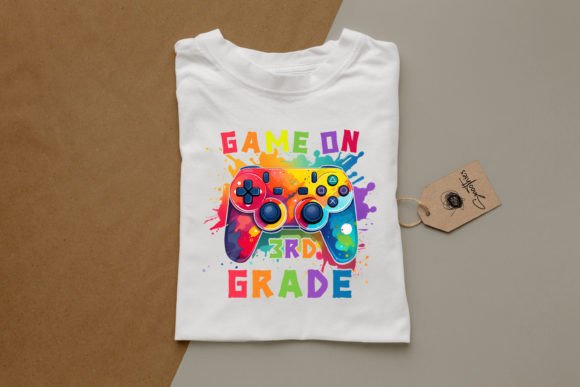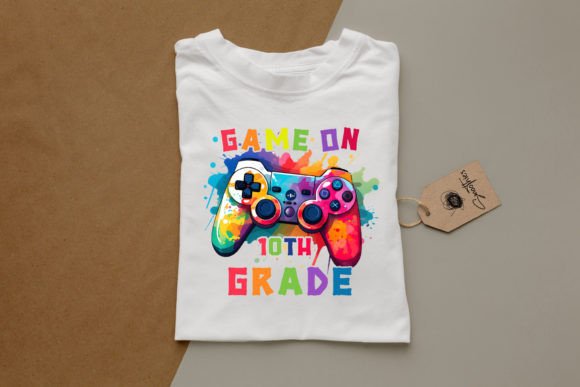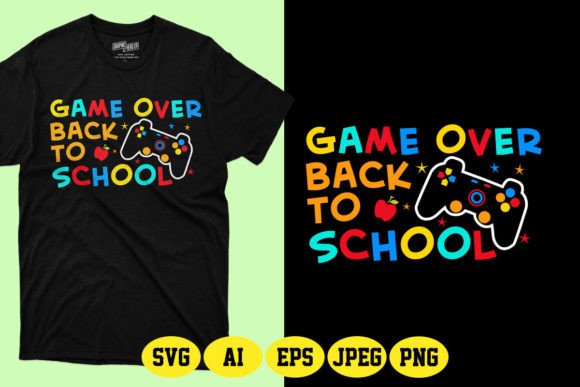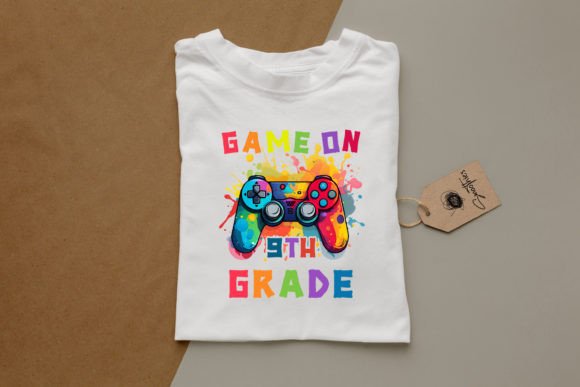
Back to School Game on 9th Grade
Starting 9th grade is more than a new year—it’s a pivot point. Students step into high school with fresh expectations, evolving identities, and real academic stakes. A Back to School Game on 9th Grade isn’t just playful imagery; it’s a visual anchor for that transition—designed to resonate with students, support educators, and empower creators who turn meaning into tangible products.
This high-resolution PNG file (4000×4000 pixels, 300 dpi, transparent background) gives you professional-grade flexibility—not as clipart, but as a foundation. It’s built for clarity, scalability, and adaptability across physical and digital contexts. Whether you’re printing on cotton or sublimating onto ceramic, the clean lines and intentional composition hold up without distortion or pixelation.
Creative Possibilities That Go Beyond Decoration
A single design can spark dozens of thoughtful applications—especially when rooted in a relatable, milestone-driven theme like 9th grade. Here’s how different users bring it to life:
- Educators and counselors use it to create welcoming classroom banners, orientation handouts, or digital slide backgrounds—pairing the image with growth-focused prompts (“What’s one skill you’ll build this year?”) to foster reflection before the first bell rings.
- Small business owners (like local print shops or school spirit vendors) integrate it into custom t-shirt bundles for incoming freshmen—adding names, graduation years, or school mascots in complementary fonts to personalize without overcrowding.
- Freelance designers layer it into mockups for social media kits—think Instagram story templates for back-to-school prep checklists or TikTok carousel posts highlighting study tips for high school success.
- Hobbyists and parents repurpose it for handmade birthday cards or dorm-room wall art—printing on matte photo paper, mounting on foam board, or framing with minimalist black or walnut finishes for warmth and cohesion.
The transparent background makes blending seamless. Overlay it on soft pastel gradients for a calming classroom poster. Place it over textured kraft paper for rustic party decorations. Scale it down to 2 inches for vinyl stickers on water bottles or laptop decals—each adaptation stays legible and intentional.
Practical Use Cases Across Platforms and Formats
This isn’t a “one-size-fits-all” graphic—it’s a tool designed for specificity. Its resolution and transparency mean it works where many school-themed assets fall short: in sublimation, waterslide transfers, and fine-art printing.
For sublimation users, the 300 dpi ensures crisp detail on mugs, pillows, and tote bags—even at full wraparound coverage. No blurring at seams. No loss of edge definition. Just consistent, vibrant output that holds up after repeated washing or handling.
For print-on-demand sellers, it integrates cleanly into platforms like Printful or Gelato. Upload once, assign to multiple products (t-shirts, notebooks, phone cases), and maintain brand consistency across your store—all while avoiding licensing complications common with generic stock art.
For bloggers and curriculum designers, it serves double duty: as an engaging visual in downloadable PDFs (e.g., “9th Grade Success Planner”) and as a recognizable icon in email newsletters—helping readers instantly associate your content with student readiness and academic confidence.
Adapting Thoughtfully for Your Audience
Who you’re designing *for* changes how you design *with* it.
If your audience is teenagers, keep typography bold but legible, colors modern but not overwhelming—think deep navy, slate gray, and a single accent tone (like burnt orange or teal). Avoid cluttered layouts. Let the game-inspired motif breathe so it feels aspirational—not childish.
If your audience is parents or PTA members, pair the image with clear, action-oriented language: “Support Your 9th Grader’s First Semester,” “Tools to Navigate High School Transitions,” or “What to Expect in Freshman Year.” The design becomes a conversation starter—not just decoration.
If your audience is educators preparing orientation materials, consider using the same base file across multiple formats: a large-format poster for hallway displays, a reduced version for student handbooks, and a simplified monochrome variant for photocopies—ensuring recognition and continuity without sacrificing function.
Keeping Results Clear, Consistent, and Original
High resolution doesn’t guarantee high impact—intention does. Here’s how to stay grounded:
- Limit color shifts. Since screen and printer outputs vary, test small batches first—especially for sublimation. Adjust saturation or contrast in your editing software if needed, but avoid heavy filters that compromise the original’s clarity.
- Maintain hierarchy. When combining text and image, let the Back to School Game on 9th Grade serve as the focal point—not a background filler. Use generous white space and strategic alignment to guide attention.
- Respect context. A design that works on a pillow may feel oversized on a sticker. Resize proportionally and re-evaluate legibility at each scale. If fine details vanish below 3 inches wide, simplify or highlight key elements only.
- Build around authenticity. Don’t force trends. Ninth graders respond to sincerity—not forced slang or exaggerated graphics. Let the concept carry weight: growth, preparation, belonging. That resonance lasts longer than any stylistic flourish.
You don’t need to reinvent the image to make it meaningful. You need to understand what it represents—and then match that meaning to real needs: a teacher’s desire to ease anxiety, a parent’s wish to stay informed, a student’s quiet hope to belong.
Why This Matters Beyond the Download
In a market saturated with generic school clipart, a focused, high-quality asset like this stands out because it’s specific—not vague, not seasonal, not disposable. It meets a real moment: the threshold of high school. And because it’s delivered as a production-ready PNG, it skips the friction of conversion, tracing, or resolution guessing.
That saves time. It reduces revision cycles. It builds trust—with your clients, your students, or your own creative process. When tools are reliable, creativity becomes repeatable. When assets are versatile, ideas become scalable.
So whether you’re launching a new line of academic motivation products, updating your classroom toolkit, or designing your first-ever sublimation collection—start with intention. Let the Back to School Game on 9th Grade be more than a file. Make it a starting point for clarity, connection, and purposeful creation.